ONMU 080608 PM Milling Inserts: Features, Applications & Selection for Steel and Stainless Steel
Author : Surya makeyoueasy | Published On : 04 Nov 2026
Introduction
ONMU 080608 PM milling inserts are designed for indexable face milling operations where cutting-edge economy, machining stability, and consistent surface finish are important. With an octagonal geometry and multiple usable cutting edges, these carbide inserts suit a range of steel and stainless steel machining applications, depending on the grade and chip breaker configuration. Understanding their features, applications, and selection criteria helps machinists achieve reliable cutting performance and improve tooling efficiency.
1. What Are ONMU 080608 PM Milling Inserts?
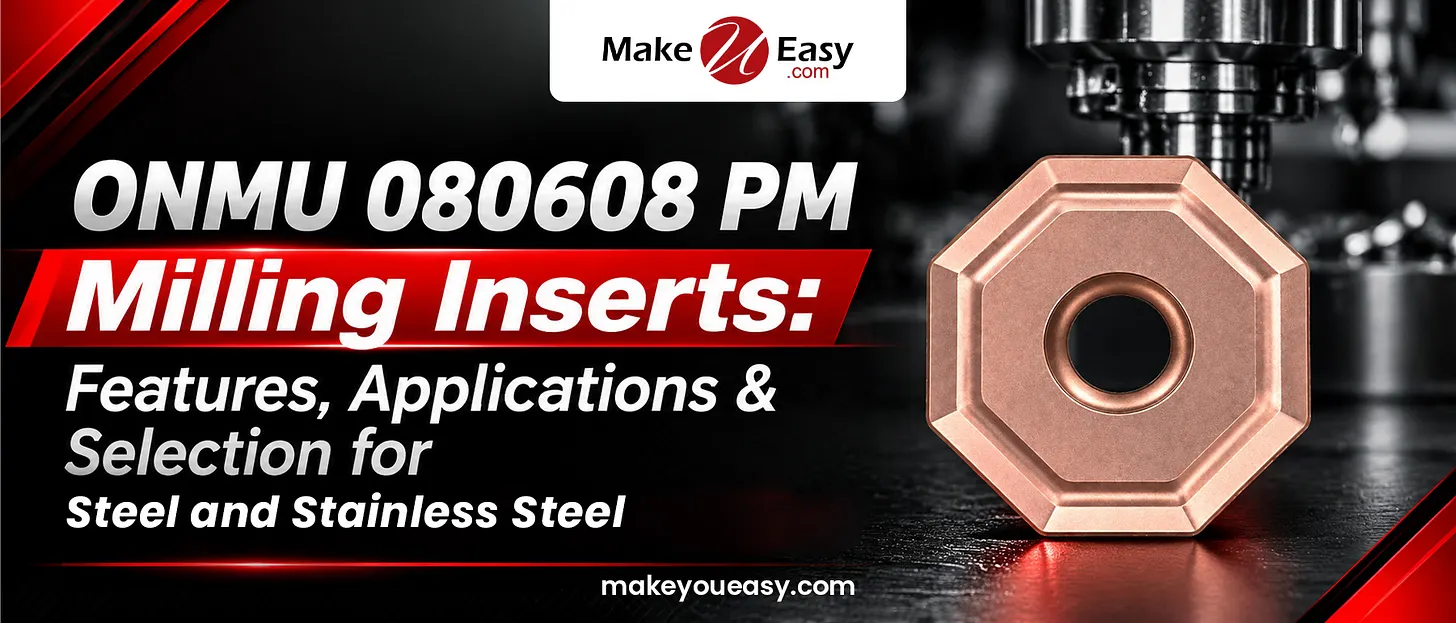
ONMU 080608 PM is an insert designation associated with an octagonal milling insert family used in compatible face milling cutters.
These inserts generally feature a negative insert geometry with multiple cutting edges. Their design allows the machinist to index the insert to a fresh cutting edge when the existing edge becomes worn.
The PM suffix is manufacturer-specific and should not be interpreted as a universal ISO designation. Its exact meaning and cutting characteristics must be confirmed using the relevant manufacturer’s catalogue.
2. Key Features of ONMU 080608 PM Inserts
Octagonal Insert Geometry
The octagonal shape provides multiple usable cutting edges. Compatible double-sided ONMU designs can offer up to 16 cutting edges, helping reduce insert replacement frequency and tooling costs.
Multiple Cutting Edges
Instead of replacing the entire insert after one cutting edge wears out, operators can rotate or index the insert to use another available edge, provided the insert and cutter design support it.
Carbide Construction
These inserts are manufactured from cemented carbide, providing the hardness and wear resistance required for industrial milling applications.
Corner Radius
The ONMU 080608 configuration commonly features a 0.8 mm corner radius. This helps support the cutting edge and influences surface finish and machining behaviour.
Coating and Grade Options
Different manufacturers offer carbide grades and coatings suited to specific workpiece materials and cutting conditions. Selecting the right combination is important for controlling wear, heat, and edge stability.
3. Understanding the ONMU 080608 Designation
The designation identifies the basic insert family and its dimensional configuration.
CodeGeneral IdentificationONMUOctagonal milling insert family08Size series06Thickness series080.8 mm corner radius
Typical ONMU 080608 inserts have an inscribed circle of approximately 20.2 mm and a thickness around 6 mm, depending on the manufacturer’s design.
Additional suffixes such as PM, chip breaker codes and grade designations identify specific product configurations. Always consult the manufacturer’s dimensional drawing before ordering replacement inserts.
4. Applications in Steel and Stainless Steel Machining
ONMU inserts are commonly used in face milling applications. Their suitability for different materials depends on the selected carbide grade, chip breaker, and machining conditions.
Steel Machining
Steel machining involves varying cutting forces, temperatures, and chip formation depending on the workpiece material.
Suitable ONMU insert configurations can be used for:
-
Face milling of carbon and alloy steels
-
Roughing and medium milling operations
-
Machining industrial steel components
-
Surface machining of machine parts and fabricated components
Choosing an appropriate grade and chip breaker helps manage cutting forces, tool wear, and chip evacuation.
Stainless Steel Machining
Stainless steel presents additional challenges because of its toughness, work-hardening tendency and heat generation during cutting.
Suitable insert configurations can support:
-
Face milling of stainless steel components
-
Machining austenitic and other stainless steel grades
-
Medium machining operations
-
Industrial component manufacturing
For stainless steel, select a grade with suitable toughness and wear resistance. Sharp cutting geometry, proper feed and effective coolant application can also help reduce built-up edge and work hardening.
5. Benefits of Using ONMU 080608 PM Inserts
Selecting a suitable ONMU insert configuration offers several practical advantages:
Improved Cutting-Edge Economy: Multiple usable edges can reduce the cost per cutting edge and improve insert utilization.
Consistent Machining: Correct geometry and grade selection help maintain stable cutting conditions.
Reduced Tooling Costs: Indexing unused edges can reduce frequent insert replacements.
Versatile Applications: Suitable configurations are available for different steel and stainless steel machining requirements.
Efficient Face Milling: Compatible cutter systems allow these inserts to support productive material removal and surface machining.
6. How to Select the Right ONMU 080608 PM Insert
Before selecting an insert, consider these important factors:
-
Workpiece Material: Identify whether the application involves carbon steel, alloy steel, or stainless steel.
-
Carbide Grade: Choose a grade based on material hardness, cutting speed, machining stability, and expected tool wear.
-
Chip breaker Geometry: Select a suitable chip breaker for roughing, medium machining, or finishing requirements.
-
Cutter Compatibility: Verify the insert designation, dimensions, seating arrangement, and clamping system against the cutter manufacturer’s specifications.
-
Cutting Parameters: Follow the recommended cutting speed, feed per tooth, and depth of cut for the selected grade and application.
For stainless steel, pay particular attention to heat generation, work hardening, and chip evacuation. For steel, consider cutting forces, wear resistance, and machining stability.
7. Tips for Improving Insert Performance
-
Use recommended cutting parameters from the insert manufacturer.
-
Ensure the cutter pocket is clean before installing an insert.
-
Check insert seating and clamping torque.
-
Avoid excessive tool overhang wherever possible.
-
Inspect cutting edges regularly for flank wear, chipping, and built-up edges.
-
Use suitable coolant or dry machining conditions according to the insert manufacturer’s recommendations.
These practices help maintain machining consistency and extend usable cutting-edge life.
Conclusion
ONMU 080608 PM milling inserts offer an economical option for compatible face milling operations through their octagonal geometry and multiple usable cutting edges. With suitable carbide grades, coatings, and chip breaker configurations, they can support steel and stainless steel machining requirements. Understanding insert dimensions, cutter compatibility, and cutting conditions is essential for selecting the right configuration. Proper insert selection and machining practices help improve productivity, maintain surface quality, and manage tooling costs.
Frequently Asked Questions
1. What are ONMU 080608 PM milling inserts used for?
They are used in compatible face milling cutters for machining applications involving steel and other suitable workpiece materials.
2. How many cutting edges does an ONMU 080608 insert have?
Compatible double-sided octagonal designs can provide up to 16 usable cutting edges.
3. Are ONMU 080608 inserts suitable for stainless steel?
Yes, suitable grades and chip breaker configurations are available for stainless steel machining.
4. What is the corner radius of an ONMU 080608 insert?
A common configuration has a 0.8 mm corner radius, although specifications should be verified against the manufacturer’s catalogue.
5. How do I select the correct ONMU 080608 PM insert?
Check the workpiece material, carbide grade, chip breaker, insert dimensions, and compatibility with the milling cutter.
Popular Search Keywords
ONMU 080608 PM milling inserts, ONMU octagonal inserts, ONMU carbide inserts, face milling inserts for steel, stainless steel milling inserts, 16 cutting edge inserts, octagonal face milling cutters, indexable carbide milling inserts, CNC face milling tools, milling insert selection guide
