Is Microneedling for Acne Scars the Best Solution for Scar Removal
Author : EnfieldRoyalClinic Abu Dhabi | Published On : 12 Jun 2026
Acne scars are one of the most persistent skin concerns, often remaining long after breakouts have healed and leaving behind uneven texture, visible indentations, and areas of discoloration that affect overall skin smoothness. Because these changes occur beneath the surface of the skin, they are often resistant to simple topical approaches, leading many people to explore more advanced skin renewal methods. One of the most widely discussed approaches is collagen-based skin stimulation, especially microneedling, which has gained attention for its role in skin remodeling. In fact, growing interest in Microneedling for Acne Scars in Abu Dhabi reflects how people are increasingly looking for structured, science-driven methods to improve long-term skin texture and restore a smoother appearance.
Understanding Acne Scars and Why They Are Hard to Remove
Acne scars form when inflammation from breakouts damages the skin’s deeper layers, disrupting the natural healing process. Instead of repairing itself with evenly distributed collagen, the skin may produce irregular tissue structures. This results in visible textural changes such as depressions, uneven surfaces, or hardened areas that remain even after acne clears.
What makes acne scars particularly difficult to address is that they are not only surface-level concerns. They involve structural changes within the skin’s deeper layers, which means that improving their appearance often requires more than superficial treatment. The skin needs to rebuild its internal support system, which is a slow and gradual biological process.
Because of this complexity, many approaches focus on encouraging the skin to regenerate itself rather than trying to cover or temporarily smooth the surface.
How Microneedling Supports Skin Reconstruction
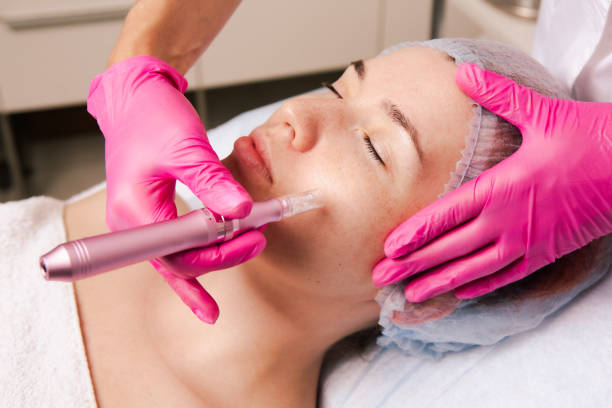
Microneedling is based on the principle of controlled skin stimulation. By creating micro-level channels in the skin, it triggers the body’s natural repair response. This response includes the activation of collagen and elastin production, both of which are essential for restoring firmness and structure.
When applied to areas affected by acne scarring, this process encourages the skin to rebuild its underlying framework. Over time, new collagen fibers begin to replace damaged tissue, helping to smooth out irregularities and improve surface texture.
What makes this method significant is that it works with the skin’s own healing system. Instead of forcing change from the outside, it stimulates internal regeneration, allowing the skin to gradually reshape itself in a more balanced and refined way.
The Role of Collagen in Scar Improvement
Collagen is the structural foundation of healthy skin. It provides strength, elasticity, and smoothness. When acne damages the skin, collagen fibers are often broken or unevenly distributed, leading to visible scarring.
Microneedling supports the production of new collagen in areas where the skin has lost its natural structure. As fresh collagen develops, it begins to fill in depressed areas and smooth out uneven texture. This gradual rebuilding process helps reduce the visibility of scars and improves overall skin quality.
Over time, increased collagen density contributes not only to scar improvement but also to stronger and more resilient skin. This makes the skin better equipped to maintain its smooth appearance.
Is Microneedling the Best Solution for Acne Scars?
The idea of a “best” solution for acne scars depends on how the skin responds to regeneration rather than a single universal outcome. Microneedling is often considered one of the most effective approaches because it targets the root cause of scarring, which is structural imbalance beneath the skin’s surface.
Instead of focusing only on surface appearance, it works at a deeper level to stimulate repair and reconstruction. This allows for gradual but meaningful improvement in texture, especially for scars that are not fully responsive to surface treatments.
However, the effectiveness can vary depending on scar depth, skin type, and consistency of the skin’s healing response. Some scars may show noticeable improvement, while deeper or long-standing scars may require extended periods of regeneration to achieve visible refinement.
Skin Remodeling and Long-Term Transformation
Microneedling does not provide instant transformation, but instead supports ongoing skin remodeling. After each session of controlled stimulation, the skin begins a cycle of repair that includes inflammation, regeneration, and tissue strengthening. During this cycle, new collagen fibers are formed and integrated into the skin’s structure.
With repeated cycles of regeneration, the skin gradually becomes smoother and more even. This slow transformation is one of the reasons microneedling is valued as a long-term approach rather than a quick corrective solution.
As the skin continues to rebuild itself, the appearance of acne scars often softens, and the overall texture becomes more refined and balanced.
Comparing Microneedling to Other Scar Improvement Approaches
Acne scar improvement can involve multiple strategies, but microneedling stands out because of its ability to work across different scar types. Whether the scars are shallow or moderately deep, the stimulation of collagen production supports gradual improvement in texture.
Unlike methods that focus only on surface correction, microneedling encourages structural rebuilding from within the skin. This internal approach often leads to more natural-looking results because it enhances the skin’s own regenerative capacity.
While no single method can guarantee complete scar removal, microneedling is frequently recognized for its ability to improve overall skin uniformity and reduce the prominence of scarring over time.
The Importance of Gradual Skin Renewal
One of the key aspects of acne scar improvement is understanding that skin renewal takes time. The skin naturally operates in cycles, and collagen production does not happen instantly. Instead, it builds gradually as the skin responds to repeated stimulation and healing signals.
Microneedling aligns with this natural rhythm, allowing the skin to slowly reconstruct its support structure. This gradual process ensures that changes appear natural and consistent rather than abrupt.
As new tissue replaces older, uneven layers, the skin begins to look smoother and more refined. This ongoing improvement is what makes the process sustainable and effective for long-term texture enhancement.
Conclusion
Microneedling is widely regarded as one of the most promising approaches for improving the appearance of acne scars because it addresses the underlying structural damage rather than only the surface symptoms. By stimulating collagen production and supporting natural skin regeneration, it helps the skin gradually rebuild itself into a smoother and more even texture. While it may not be an instant or universal solution for complete scar removal, its ability to enhance long-term skin quality makes it a strong option for those seeking meaningful improvement. The increasing interest in Microneedling for Acne Scars in Abu Dhabi highlights its relevance as a modern skin-rejuvenation approach focused on restoring natural smoothness and improving overall skin resilience.
FAQs
Is microneedling considered an effective solution for acne scars?
Yes, it is considered effective for improving the appearance of acne scars by stimulating collagen production and supporting skin regeneration.
Can microneedling completely remove acne scars?
It may significantly reduce the visibility of scars, but results depend on scar depth and individual skin response, and complete removal is not guaranteed.
How does microneedling improve scar texture?
It encourages the skin to produce new collagen, which helps rebuild damaged areas and gradually smooth out uneven texture.
Does microneedling work on different types of acne scars?
Yes, it can help improve various scar types, especially those related to texture irregularities and surface indentations.
Why does microneedling take time to show results?
Because it relies on the skin’s natural healing cycle, improvements occur gradually as new collagen forms and the skin slowly rebuilds its structure.
