Hotel Management Software for Small Hotels: Cloud vs Traditional Systems
Author : InnCrew pms | Published On : 21 Aug 2026
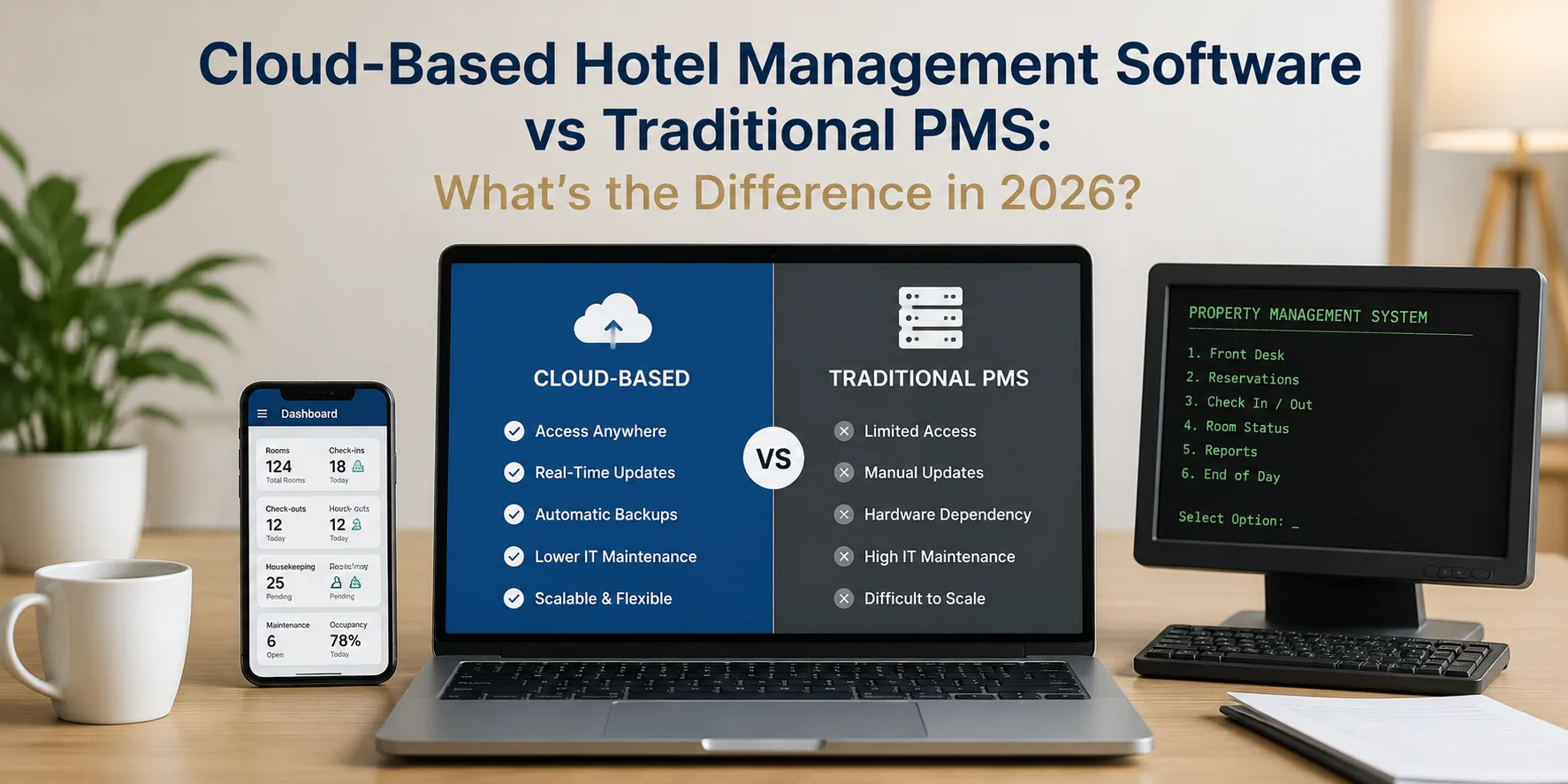
Running a small hotel is very different from running a large chain. There are fewer people, tighter budgets, and usually no dedicated IT team sitting around waiting for something to break. That is why choosing the right cloud based hotel management software can make a noticeable difference in how smoothly daily operations run.
For many small hotels in the USA, the choice usually comes down to two options: continue using a traditional system that has been in place for years or move toward a cloud-based approach that gives staff more flexibility.
But is cloud really better? Or does a traditional setup still make sense?
The answer depends on how your hotel operates, what your team needs, and how much flexibility you want going forward.
Why Small Hotels Need the Right Technology
Small hotels often operate with lean teams.
One person may handle the front desk in the morning, another may manage housekeeping, while the general manager takes care of everything from guest complaints to maintenance problems.
When information is spread across different systems, paper notes, spreadsheets, and phone calls, small issues can quickly become operational headaches.
A room may be cleaned but the front desk may not know.
A maintenance problem may be reported but forgotten during a busy shift.
A manager may need an update but have to call three different people to get it.
The problem isn't always the lack of technology. Sometimes, it is having technology that doesn't match the way hotel staff actually work.
What Is a Traditional Hotel System?
A traditional hotel PMS system is typically installed on computers or local servers at the property. It has traditionally been used to manage core hotel activities such as reservations, guest information, billing, check-ins, and check-outs.
These systems can be reliable and familiar. If your team has used one for years, everyone already knows how it works.
But there are limitations.
Access may depend on specific computers. Updates can require technical support. Information may not be available to employees working away from the front desk.
For a small property, these limitations can become frustrating when employees are constantly moving around the hotel.
What Is a Cloud-Based System?
A cloud system works differently.
Instead of keeping the software and data tied to a computer inside the property, the platform is hosted online. Staff can access the information through supported devices with an internet connection.
This makes it easier for managers and employees to work from different locations.
A housekeeper can update a room status from the hallway.
A maintenance employee can receive a task while working on another floor.
A general manager can check operational information without sitting at the front desk.
This flexibility is one of the biggest reasons cloud technology has become increasingly attractive to independent hotels.
Cloud vs Traditional: Where the Difference Really Matters
The biggest difference isn't simply where the software is hosted.
It is how easily information moves around the hotel.
With a traditional setup, staff may need to return to a workstation or communicate with another department before an update reaches the right person.
With a cloud environment, updates can be shared much faster.
Imagine a guest checking out at 11:00 AM.
Housekeeping needs to know the room is ready for cleaning.
Once the room is cleaned, the front desk needs to know.
If housekeeping discovers a broken faucet, maintenance needs to know.
If maintenance fixes it, the room status needs to be updated again.
That is a lot of information moving between departments.
The more manual those handoffs are, the more opportunities there are for something to get missed.
1. Accessibility Becomes Much Easier
For a small hotel, accessibility can be a surprisingly important advantage.
Traditional systems generally depend on fixed computers or specific locations.
Cloud platforms allow authorized users to access information from supported devices wherever they are working.
That matters because hotel employees don't stay in one place.
Housekeeping staff move between rooms.
Maintenance teams move between floors.
Managers walk around the property.
A system that follows the employee is often more useful than one that requires the employee to return to the system.
2. Mobile Access Helps Teams Work Faster
This is where mobile hotel management software can make a real difference.
Instead of writing down a task and remembering to report it later, staff can update information while the task is happening.
For example, a housekeeper notices a damaged light fixture during room cleaning.
Rather than writing it on a piece of paper and hoping someone sees it, the issue can be reported immediately through a connected workflow.
The same principle applies to room updates, guest requests, inspections, and other daily activities.
Small improvements in communication can add up quickly during a busy shift.
3. Cloud Systems Reduce Hardware Dependence
Traditional systems can require local hardware, maintenance, backups, and technical support.
For a small hotel without an internal IT department, that can create additional work.
A cloud approach moves much of the technical infrastructure away from the property.
That doesn't mean technology becomes maintenance-free. Internet connectivity, user access, security, and provider reliability still matter.
But the hotel does not have to manage the same level of physical infrastructure on-site.
For small properties trying to keep operations simple, that can be valuable.
4. Better Visibility Across Departments
Hotel operations are interconnected.
Front desk teams need accurate room information.
Housekeeping needs to know which rooms should be prioritized.
Maintenance needs to know about problems before they affect guests.
Managers need to understand what is happening across the property.
A modern hotel property management software environment can provide a central source of information for many of these activities.
The real benefit comes when information is visible to the people who actually need it.
That reduces the classic hotel problem of:
"I thought someone already told them."
5. Cloud Technology Doesn't Always Mean Replacing Your PMS
This is an important point for small hotel owners.
Moving toward cloud-based operations does not necessarily mean throwing away an existing PMS.
A hotel PMS companion tool can work alongside an existing system and focus on the operational activities that happen after reservations and guest records are handled.
This can include housekeeping coordination, maintenance requests, task assignments, inventory activities, and staff communication.
For a hotel that is happy with its current PMS but frustrated by operational communication, this approach can be much more practical than a complete system replacement.
6. Maintenance Becomes Easier to Track
Maintenance problems are rarely convenient.
A leaking faucet, broken air conditioner, damaged furniture, or faulty appliance can quickly become a guest complaint if nobody follows up.
A connected hotel maintenance management software workflow can help staff report issues, assign them to the right person, and track their progress.
The advantage isn't simply having another digital record.
It is knowing what is still open.
For managers, that visibility makes it easier to identify problems that are sitting unresolved instead of discovering them after a guest complains.
7. Cloud Technology Supports Remote Management
Small hotel owners and general managers aren't always inside the property.
They may be visiting another location, handling administrative work, or managing several responsibilities at once.
Cloud access makes it easier to stay informed without physically being at a specific workstation.
Managers can review available information, monitor tasks, and stay connected with their teams remotely, depending on the platform and permissions available.
That can be particularly useful for independent hotel operators who cannot afford to have management standing at the front desk all day.
Where Traditional Systems Still Make Sense
It would be unfair to say that traditional systems are automatically bad.
They can still work well for hotels that have stable processes, reliable infrastructure, experienced staff, and little need for remote or mobile access.
Some properties may also have significant investments in existing technology and may not want to replace everything at once.
The question isn't really:
"Is traditional software bad?"
The better question is:
"Does our current system support the way our hotel operates today?"
If the answer is yes, there may be no urgent reason to replace it.
If staff are constantly dealing with outdated information, manual communication, limited access, and disconnected workflows, however, it may be time to consider another approach.
Cloud PMS vs Traditional PMS: What Should Small Hotels Choose?
The cloud PMS vs traditional PMS discussion often becomes too focused on software features.
For small hotels, the more important questions are practical:
Can staff access information when they need it?
Can managers see what is happening without making constant phone calls?
Can departments share updates quickly?
Can the system work with mobile devices?
Can the hotel add new capabilities without rebuilding its entire technology setup?
These questions tell you much more about whether a system is suitable than a long list of technical features.
The Role of Hotel Operations Software
There is also a growing distinction between managing reservations and managing daily hotel operations.
Reservations, billing, guest profiles, and booking information remain essential.
But daily operations involve people, tasks, rooms, maintenance issues, inspections, supplies, and constant communication.
That is where hotel operations management software can add value.
The goal isn't necessarily to replace the systems a hotel already depends on.
It is to make the operational side of the business easier to coordinate.
What Should Small Hotels Look for in 2026?
If you're evaluating hotel technology today, don't start with the question, "Which software has the most features?"
Start with your team's biggest problems.
If room status updates are frequently delayed, look for real-time coordination.
If managers spend hours chasing staff for updates, look for task visibility.
If maintenance requests disappear between shifts, look for proper tracking.
If staff rarely sit at computers, prioritize mobile access.
If you already have a PMS that handles reservations well, consider whether you actually need to replace it or simply add an operational layer around it.
The best technology is the one your team will actually use every day.
The Bottom Line
For small hotels in the USA, the move from traditional systems to cloud technology isn't just about following a software trend.
It is about making daily work easier.
Cloud-based systems can give teams greater accessibility, faster communication, mobile flexibility, and better operational visibility. Traditional systems can still be useful where existing workflows are stable and the technology meets the property's needs.
For many independent hotels, the smartest approach may not be choosing one system and abandoning the other. Instead, it can mean keeping the core PMS that already works while adding modern operational tools where the existing setup falls short.
Because at the end of the day, hotel technology should make the team's job easier—not give them another system to work around.
FAQs
Q1. What is better for a small hotel, cloud or traditional software?
Cloud software is often better for small hotels that need mobile access, remote management, and real-time coordination.
Q2. Can a traditional PMS work with cloud software?
Yes. Many operational platforms can work alongside an existing PMS instead of requiring a complete replacement.
Q3. Is cloud hotel software expensive?
Costs vary by provider and features, but cloud systems can reduce the need for on-site hardware and IT maintenance.
Q4. Can hotel staff use cloud software on mobile devices?
Yes. Many modern platforms are designed for smartphones and tablets, allowing staff to work while moving around the property.
Q5. Is cloud software secure for hotels?
Reputable providers use security measures such as encryption, access controls, backups, and ongoing monitoring.
Q6. Do small hotels need to replace their existing PMS?
Not always. A hotel can keep its current PMS and add operational technology where additional capabilities are needed.
Q7. How does cloud software help hotel managers?
It can give managers easier access to operational information, tasks, room updates, and team activity from different locations.
Q8. What should small hotels consider when choosing hotel software?
Consider mobile access, ease of use, real-time updates, integrations, security, scalability, and how well the software fits your existing workflow.
