Dual-Use Dilemma: Strategically Balancing Commercial & Defense Markets
Author : Alyssa Miller | Published On : 09 Sep 2026
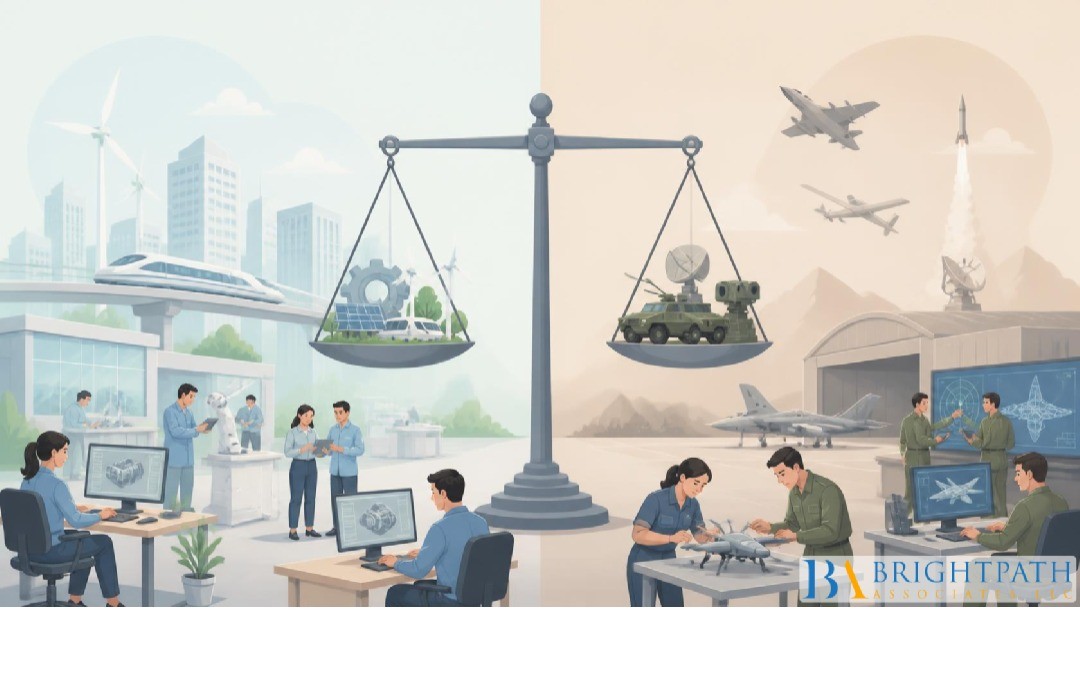
The line between commercial technology and defense capability is becoming increasingly difficult to define. Artificial intelligence, satellite communications, robotics, advanced sensors, cybersecurity, high-performance computing, and autonomous systems are no longer confined to a single market. Technologies developed for civilian applications can increasingly support national security, while innovations originating in defense programs can find valuable commercial applications.
This convergence creates an important opportunity for aerospace and technology companies. A business capable of serving both commercial and defense customers can diversify revenue, broaden its addressable market, and potentially accelerate innovation.
But the dual-use model also creates a strategic challenge. Commercial and defense customers do not necessarily purchase technology for the same reasons, follow the same procurement processes, or operate under the same regulatory expectations. Companies therefore need more than a versatile product. They need an operating model capable of balancing two very different markets.
Why Dual-Use Technology Is Becoming More Important
Dual-use technology refers to products, systems, software, components, or capabilities that can serve both civilian and military applications. Its importance has increased as technological boundaries have blurred across aerospace, space, electronics, robotics, cybersecurity, and advanced manufacturing.
For a technology company, the business case is compelling. A common platform can potentially distribute research and development expenses across multiple customer segments. Commercial revenue can help support innovation, while defense contracts can provide access to specialized applications and long-term government opportunities.
Commercial customers frequently emphasize price, scalability, speed, customer experience, and return on investment. Defense organizations place greater emphasis on reliability, mission assurance, security, resilience, traceability, regulatory compliance, and long-term capability.
Designing Products for Multiple Markets From the Beginning
One of the biggest strategic mistakes companies can make is treating defense applications as an afterthought. A technology may work extremely well in a commercial environment but require significant modification before it can operate in a defense setting. Reliability in extreme environments, secure communications, redundancy, supply-chain assurance, documentation, and long-term support may all become essential.
This is why successful dual-use companies increasingly consider potential defense requirements during the initial product-development process. Modular architecture can be particularly valuable. Instead of redesigning an entire product for each customer, companies can maintain a common technological foundation while adapting specific components for different applications.
Space Is Becoming a Major Dual-Use Opportunity
Commercial satellites, launch technologies, Earth observation systems, communications infrastructure, and space-based data services are increasingly relevant to national security. At the same time, commercial companies are developing technologies faster and often with more flexible investment models than traditional government development programs.
However, entering the defense and space ecosystem requires companies to understand more than technology. Government procurement cycles, export controls, security requirements, licensing, data management, and contractual obligations can significantly influence the economics of a new market opportunity.
Companies should therefore evaluate defense opportunities based on their impact on the entire organization—not simply on the size of the potential contract. Businesses interested in navigating these opportunities can explore BrightPath Associates’ Defense and Space Industry to better understand the broader talent and industry environment surrounding this rapidly evolving sector.
Cybersecurity Is Becoming a Business Capability
Cybersecurity represents another critical intersection between commercial and defense markets. As satellites, spacecraft, ground stations, manufacturing facilities, communications networks, and enterprise systems become more connected, the potential attack surface expands.
For companies operating in dual-use markets, cybersecurity cannot remain isolated within the IT department. Security needs to be considered across product architecture, supply chains, communications, data management, manufacturing processes, and operational systems.
Companies capable of demonstrating strong identity management, resilient communications, data protection, continuous monitoring, and supply-chain security may be better positioned to serve demanding customers across both commercial and defense environments.
Robotics and Autonomous Systems Illustrate the Opportunity
Robotics provides another clear example of dual-use potential. Space robotics can support satellite servicing, inspection, assembly, exploration, logistics, and maintenance. Similar technologies can support industrial automation, hazardous-environment operations, warehouse logistics, and defense missions.
The commercial development of robotics can therefore contribute to defense innovation while defense requirements can push commercial technology toward greater reliability, autonomy, and resilience. But customization must be carefully managed.
If every defense customer requires extensive engineering changes, development costs can increase and the commercial product may become difficult to scale. A modular platform can help companies adapt capabilities without rebuilding the underlying technology for every application.
The Future Belongs to Adaptable Companies
The convergence of commercial and defense markets is creating one of the most important growth opportunities across aerospace, space technology, advanced manufacturing, robotics, and electronics.
But dual-use success requires more than having a product with multiple applications. Companies must build the regulatory discipline, cybersecurity capabilities, supply-chain resilience, manufacturing flexibility, and leadership expertise necessary to operate effectively across different markets.
The broader strategic considerations explored in Dual-Use Dilemma: Strategically Balancing Commercial & Defense Markets demonstrate why companies need to think beyond the immediate opportunity and evaluate how dual-use capabilities fit into their long-term business model.
BrightPath Associates LLC helps organizations identify the specialized leadership and professional talent required to navigate evolving industry demands. Companies preparing for dual-use expansion can benefit from building leadership teams capable of connecting commercial growth with defense-sector expertise.
